AI vs Human Writing: What Works Better?
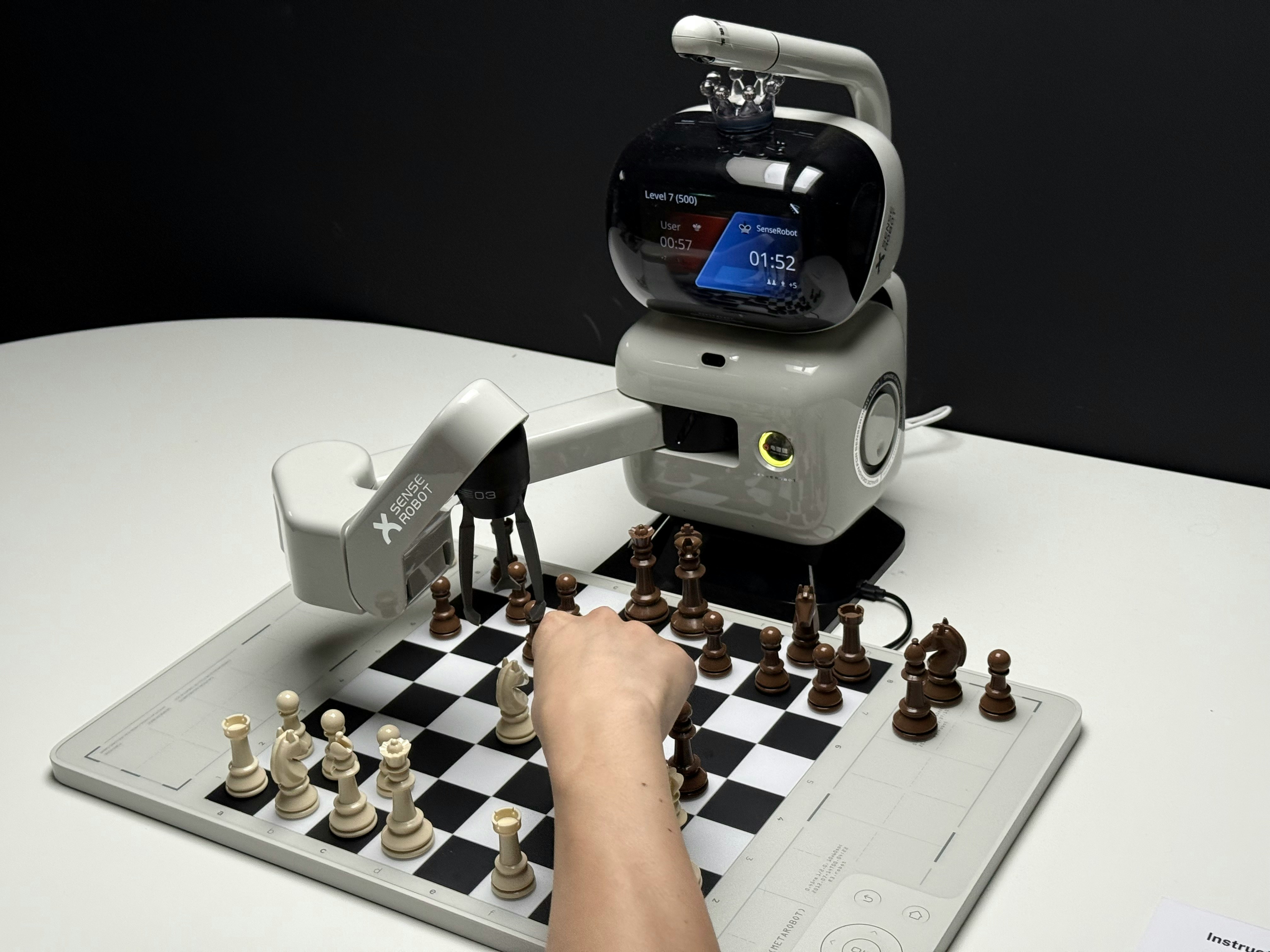
An honest comparison of AI writing and human writing — where each performs best, what the research shows, and how to decide which to use for your content.
The framing of "AI vs human writing" is slightly misleading, because the answer in almost every real-world context is not one or the other — it is both, in the right proportion, for the right tasks. But the comparison is still worth making carefully, because understanding where each approach has a genuine advantage is what lets you build a content workflow that produces better results than either alone.
Where AI Writing Outperforms Human Writing
Speed at scale
The most unambiguous advantage of AI writing is speed. A language model can produce a 1,500-word structured article in under thirty seconds. A skilled human writer typically takes two to four hours to produce the same length of quality content. For content strategies that require volume — product description libraries, FAQ generation, content localization, programmatic page creation — AI is the only practical option.
Structural consistency
AI is extremely consistent at following a structure once it has been defined. If you brief it to produce a listicle with 10 items, each with a subheading and two supporting sentences, it will produce exactly that, every time. Human writers introduce variation — sometimes creative and valuable, sometimes just inconsistent. For content types that depend on structural uniformity (email templates, support article formats, product description schemas), AI's consistency is an asset.
Handling formulaic formats
Certain content types are highly formulaic: meta descriptions, title tag variants, email subject lines, social media captions with specific character limits. These tasks require following rules more than expressing ideas. AI handles them efficiently. A single well-structured prompt can generate 20 meta description variants in seconds — work that would occupy a copywriter for an hour.
For AI-generated content that goes to social media, the Character Limit Checker and Social Media Post Formatter are essential final steps before publishing.
First-draft scaffolding
The blank page problem is real. AI eliminates it. Even for content that will ultimately be heavily human-edited, having a structured draft to react to and revise is significantly faster than writing from zero. The AI gives you a starting structure; you supply the editorial judgment. See: How to Use AI for Content Creation.
Where Human Writing Outperforms AI Writing
Original argument and opinion
AI writing is fundamentally predictive — it produces the most statistically likely continuation of a given prompt based on patterns in its training data. This makes it excellent at consensus and weak at original thought. If you want to make a genuinely novel argument, challenge a received assumption, or take a position that runs counter to the mainstream view in your industry, you need a human. AI will give you the most expected version of what someone might say on a topic. That is fine for encyclopedic content and bad for thought leadership.
Authority and credibility signals
Readers — and Google's quality evaluators — increasingly distinguish between content produced by someone with genuine expertise and content produced by a model that aggregated other people's expertise. For content in YMYL (Your Money Your Life) categories — health, finance, legal, safety — the credibility of the author matters enormously. A financial guide written by a certified financial planner with ten years of practice carries more trust than the same information organized by an AI. The tools can help structure and format that content, but the authority has to come from a human source.
Brand voice and personality
AI can approximate a voice it has been shown enough examples of, but it defaults to a generic, slightly formal register when left to its own pattern-matching. Real brand voice — the particular rhythm of how a company talks to its customers, the specific jokes it makes, the topics it cares about — is hard to capture in a prompt and easy to dilute across a high-volume AI content program. The more a piece of content depends on voice as a differentiator, the more human writing it needs.
Deep domain expertise
AI has broad knowledge but shallow mastery in highly specialized domains. A cardiologist writing about new heart failure treatment protocols, a tax attorney explaining recent court decisions on corporate structures, or a principal engineer explaining the practical tradeoffs of a specific database architecture — these require depth that AI cannot supply reliably without hallucinating specifics. For expert-level content, AI is useful for structure and editing support, not primary authorship.
Cultural and emotional resonance
The best writing makes people feel something. Humor, pathos, surprise, recognition — these require understanding the specific human context of an audience in a way that goes beyond pattern-matching. AI can produce text that looks like it has emotional resonance. It struggles to produce text that actually achieves it.
The Readability Question
AI-generated text has a measurable readability pattern. It tends toward long, multi-clause sentences, a formal register, and a higher-than-average grade level. For content aimed at a general audience, this is often a problem. The Readability Score Checker will typically show AI-generated content scoring at a higher grade level than is appropriate for consumer-facing content.
The fix is to specify reading level explicitly in the prompt ("write for a 9th-grade reading level") and to run the output through the readability checker before publishing. See: What Is a Readability Score?
What the Research Shows
Studies comparing AI and human writing on content performance metrics have produced nuanced results:
- SEO: Well-structured AI content can rank, particularly for informational and navigational queries. It performs less well on competitive, authority-dependent queries.
- Engagement: Human-authored content consistently shows higher time-on-page and lower bounce rates when the content requires genuine depth or opinion.
- Conversion: For sales copy and persuasive content, human writers who understand the specific audience outperform AI in A/B tests in most categories.
- Trust: Readers shown identical content attributed to a human expert vs. an AI consistently rate the human version as more credible, even when they cannot distinguish the two stylistically.
The Practical Decision Framework
Use AI when:
- You need volume and speed, and consistency matters more than originality
- The content type is formulaic (descriptions, summaries, meta content)
- You need a starting structure to edit from
- The task is mechanical (reformatting, converting to bullets, checking length)
Use human writing when:
- Authority and credibility are the primary value proposition
- The content requires deep domain expertise
- Voice and brand personality are differentiators
- The goal is to persuade or move the reader emotionally
Use both when:
- You need the speed of AI with the quality of human judgment
- You are producing content at scale across a mix of content types
- The content requires a solid structure that human insights will elevate
The tools on this site are built for the intersection — helping you produce more content faster while checking it against the standards that human judgment sets. Start with the Word Counter and Readability Score Checker to audit any content before it goes live.

Software Engineer at Fidelis Soft, developer of the tools, and content contributor.
Connect on LinkedIn